Together, we’re powerful
Whether you’re managing a household or managing a mullet (or both!) – we’re all part of WA’s transition to a cleaner energy future. When you understand how you use energy, you can then make simple changes to help reduce your power bill.
It's no fun to feel hot and bothered...
But your air-conditioning could be responsible for up to 40% of your energy costs (just like the average household)!
Here's a few tips to keep your cool.
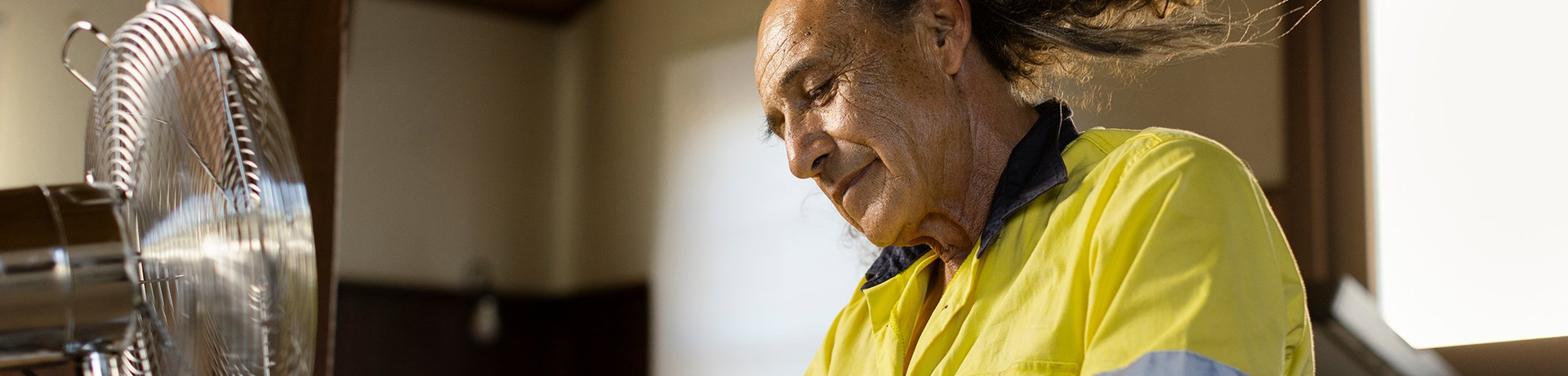
Try the fan first
That easy breezy feeling from a fan can make you feel around 3°C cooler and it moves out the hot air in the room first which helps the air-con use less energy later.
Fans use a whole lot less energy, which makes them cheaper to run compared to the air con.
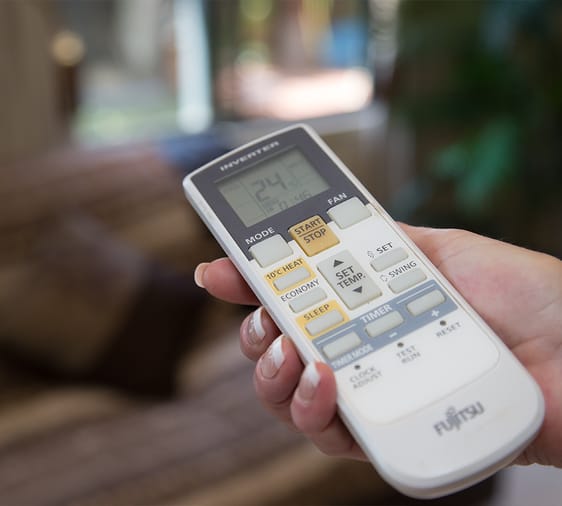
Grab the remote
Set your thermostat no lower than 21 to 24°C in summer, depending where you live.
Each degree lower can increase your power costs by 10% and that really adds up.
Keep your cool
Close off any rooms you’re not using so you don't waste energy cooling them when you don’t need to.
If you have a ducted air-con system, turn off the ducting to the rooms you don’t need to use.
Easy does it
When you expect a hot day, close your blinds to block the sun’s heat.
First, turn on your fan. Then, switch on your air-con earlier. This way, it won't have to work harder later to cool a hot space.
Feeling a bit humid?
When you do need the air-con, look for the ‘dry’ setting to help with humidity. Change your air-con mode to ‘dry’ and it will really chill you down and make your space more comfortable. This uses less energy too!
Where's your energy going?
Air-con can take the blame for around 40% of the average household’s energy costs – and here are some others to watch out for!
Appliances
Contributes around 25% towards your usage costs
Check the manual for energy-saving modes and switch to energy-efficient models with the highest star rating when it’s time for a replacement.
They may cost a little more to buy upfront, but will save on running costs over the years.
Water heating
Contributes around 23% of the energy used in an Aussie home.
More than half of hot water use is in the bathroom, a third in the laundry and the rest is used in the kitchen. Learn more about saving water during shower time.
Be the boss of your appliances
Use the savings calculator to find out the estimated running costs of your appliances and how you might save money by cutting down your usage.
Explore more energy saving tips...
*Savings and figures should be used as a guide only. Always consider the energy star rating when purchasing new appliances. For more information, visit the WA Government household and business energy tips, www.energyrating.gov.au and www.yourhome.gov.au/energy.
| Tips to reduce your water heating costs... |
|
| Fridge |
|
| Dishwasher |
|
| Washing machine & dryer |
|
| Reduce your lighting costs... |
|
| Appliances (like TVs & game consoles) |
|
| Tips for an energy efficient pool... |
|
| By keeping your appliances in good working condition - like cleaning or changing filters - you could save hundreds a year. |
|
Keep track of your energy use
Learn more about how your household uses energy and how your electricity bill is calculated.
Monitor your usage with our app
With our app, you can see when your household uses the most energy throughout the day. View your usage for the past year with monthly, daily and hourly interactive graphs and compare your usage with the same time last year. You can also see how much your next bill is likely to be and see how you’re tracking throughout each bill period.
Understand your bill
Make sure you understand what makes up your bill. Some of the costs you can control, for example the number of units of electricity you use. Then there’s costs such as your supply charge, which is the cost of getting electricity to your home or business through poles, wires and other infrastructure.
Horizon Power acknowledges the Traditional Custodians throughout Western Australia and their continuing connection to the land, waters and community. We pay our respects to all members of the Aboriginal communities and their cultures; and to Elders past, present and emerging.
Aboriginal and Torres Strait Islander people are advised that this website may contain images, names or voices of deceased people.