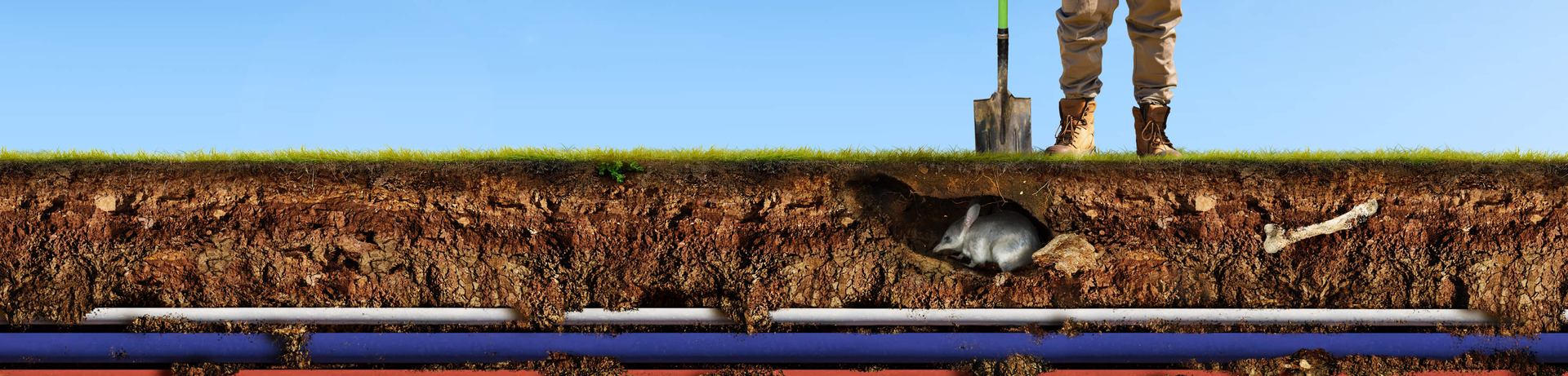
There's more going on beneath the surface than you realise
In areas with underground power, cables may be out of sight but they can still be very dangerous if accidentally struck or damaged. It’s essential to carefully plan any works in your front yard and proceed with caution if you planning on digging or excavating where underground electrical assets may be located.
Properties with underground power are connected to the electricity network through a service pillar or ‘green dome’, located just inside the boundary. Green domes contain live wires so should be treated with caution, particularly when working nearby.
Your consumer main runs from the green dome to your meter box at least 500 mm below ground. In most properties, you can determine the location of this cable by checking your meter box for a diagram. If your meter box doesn’t show this, consider hiring a qualified electrician to determine the location for you.
The consumer main is privately owned by the property owner so is not shown on Before You Dig Australia (BYDA). However, other utilities’ cables could be shown, so always check BYDA plans before you start any works.
The distribution network cable connects the green dome to the electrical network. This cable runs anywhere outside your property boundary (including in the council owned verge) and is located at least 850 mm below ground.
The main network cable attaches to the network and runs along the street on one side of the road. They’re usually located in the council verge area at least 850 mm below ground. If you’re working near the edge of your property, get a licensed surveyor to peg the boundary to ensure you don’t go past this line.
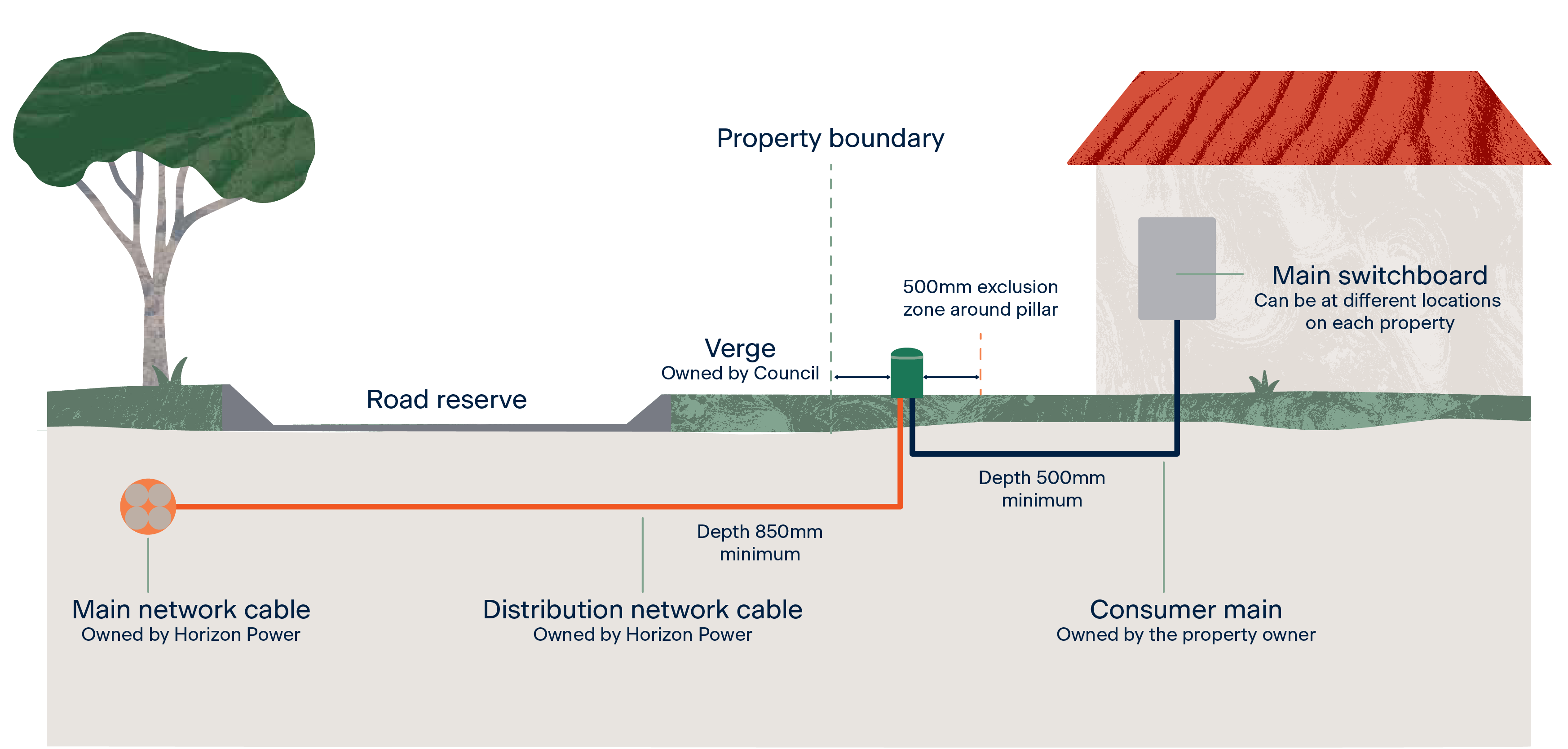
*Depending on the location of your meter, the consumer main could run diagonally across your yard and not always in a straight line from the service pillar to the meter.
Use the five Ps when planning works
If you plan on doing work in your front yard, follow the five Ps to ensure you carry it out safely and avoid hitting underground cables.
Follow these steps before carrying out any work:
- Check your meter box for the location of the consumer main on your property
- If your meter box doesn’t show this, hire a licenced electrician to locate it for you (this cable is owned by the property owner)
- If you plan on working near the edge of your boundary, hire a licenced surveyor to peg your boundary line to ensure you don’t excavate past this point
- If you intend to do work outside your property line, use the BYDA service at least two business days before your job is due to begin to ensure you have the correct information you need to carry out a safe project.
Review the utility plans obtained through BYDA and contact the asset owners if you need assistance. Look for onsite asset clues such as pit lids, marker posts and meters. Engage a BYDA Certified Locator who can assist you in locating assets electronically before potholing.
Potholing is a method to assist in establishing the exact location of all underground infrastructure. It involves making a series of test holes with equipment or by hand digging with caution to determine the position and depth of cables.
Protecting and supporting the exposed infrastructure is the responsibility of the excavator. Before start excavating, erect safety barriers around the area you are working to protect people and exposed underground networks.
Only proceed with works once you have carefully planned, prepared, potholed and put the protective measures in place to protect yourself and others from hitting underground cables and utilities.
How to take care around green domes
Green domes contain live electrical wires, so you need to be careful when performing work nearby.
Keep clear
The area above and around a green dome should be kept clear to allow for authorised access, including a 500 mm exclusion zone around the base of the unit.
Allow access
Horizon Power must be able to access green domes at any time, so keep shrubbery away and ensure access is free from obstructions. The ground level should not be raised to a level where the green dome is buried.
If you make contact with a green dome or notice any damage
Pillars contain live wires and if damaged, can be just as dangerous as a fallen powerline.
Stay away and immediately call Horizon Power on 13 23 51.

In the parts of our network which are underground, powerlines are sunk beneath the ground and a mini-pillar or ‘green dome’ is installed just inside the property to connect homes to the network.

Here's how to avoid tree branches touching powerlines, which can cause power interruptions, fire and other accidents.
Horizon Power acknowledges the Traditional Custodians throughout Western Australia and their continuing connection to the land, waters and community. We pay our respects to all members of the Aboriginal communities and their cultures; and to Elders past, present and emerging.
Aboriginal and Torres Strait Islander people are advised that this website may contain images, names or voices of deceased people.